You Don't Need to Be a Professional to Terminate a Cable, You Just Need the Right Plugs
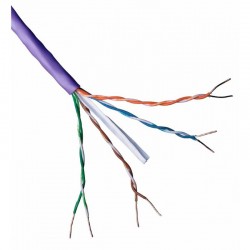
If the thought of terminating your own Cat 6 cable fills you with a quiet sense of dread, you're not alone. Getting eight tiny wires in exactly the right order, keeping the twist as tight as possible right up to the connector, then hoping the crimp tool does its job without mangling the whole thing. It's the kind of job that separates a confident result from a frustrating half-hour on your hands and knees wondering why port 6 isn't linking.
The good news? It doesn't have to be like that. Our Easy Plug range was designed specifically to take the hassle out of RJ45 termination, and give anyone - IT manager, occasional installer, or DIY enthusiast - a clean, reliable, professional-looking result without needing years of experience or a bag full of specialist tools.
Here's how they work, and why they're worth keeping in your kit.
What Makes a Pass-Through Plug Different?
A traditional RJ45 plug requires you to cut each wire to a precise length, carefully align all eight conductors in the correct order inside the connector body, and then crimp, all before you can check whether the wires are seated properly. It's a process where a tiny misalignment is enough to cause a dead connection, and you often won't know until you've already crimped the connector.
Easy Plugs use a pass-through design. Rather than stuffing eight wires into a small opening and hoping for the best, you feed the wires all the way through the front of the plug, so they stick out the end. You can then see exactly what order they're in before committing to the crimp. Once you're happy everything is aligned, the crimp tool trims the excess wires flush as it crimps, leaving you with a perfectly terminated plug, every single time.
It's a small change that makes an enormous difference to the end result, especially if you're not doing this every day.
The Easy Range: Four Steps to a Finished Lead
The whole process with Easy Plugs and the Easy Crimp Tool comes down to four straightforward steps:
1. Strip: Remove the outer sheath of the cable. The Easy Crimp Tool includes a cutting function so you can do this without needing a separate stripping tool.
2. Arrange: Fan out and order the eight conductors to the correct T568B wiring sequence. With the pass-through design, you can see exactly what you've got before proceeding.
3. Insert: Feed the wires through the plug until they're all visible from the front. No guesswork, no blind insertion.
4. Crimp: Place the plug into the Easy Crimp Tool and squeeze. The tool crimps the connections and trims the protruding wires in a single action, giving you a neat, flush finish.
That's it. A properly terminated Cat 6 plug in four steps, with no specialist training required.
Which Plug Do You Need?
We stock the Easy Plugs in two variants:
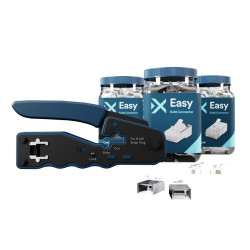
Cat 6 UTP Easy Plugs: For standard unshielded installations. These are the go-to choice for most office and building environments where interference isn't a significant concern. Available in pots of 100.
Cat 6 FTP Easy Plugs: For shielded cable installations, where you need the added protection of a fully screened connection. Ideal for environments with higher levels of electromagnetic interference. Also available in pots of 100.
One important note: these plugs are designed for Cat 6 cable. They are not compatible with Cat 6a cable, which has a larger diameter outer sheath. If you're working with Cat 6a, you'll need to use a different solution.
Who Are Easy Plugs For?
The honest answer is: anyone who needs to terminate a Cat 6 cable and wants a reliable result without spending time on trial and error.
They're particularly useful for IT managers who occasionally need to terminate a cable on-site, perhaps to connect a wireless access point at the end of a solid-core cable run, or to create a custom-length patch lead for a specific spot in the comms cabinet. You don't need to call in a contractor for a single cable. Grab an Easy Plug, follow the four steps, and you're done.
They're equally handy for installers who want to speed up the process on smaller jobs, or for home users tackling their own structured cabling project who want the satisfaction of a professional finish without the learning curve.
What You Need to Get Started
To terminate Cat 6 with Easy Plugs, you'll want:
- Cat 6 Easy Plugs (UTP or FTP, depending on your cable)
- The Easy RJ45 Crimp Tool - designed to work specifically with the Easy Plug range. It cuts, strips, crimps, and trims in one tool, so you don't need anything else in your hand.
- A continuity tester - our Connectix Pocket Socket Tester is a simple, inexpensive way to verify that each connection is wired correctly once you've terminated both ends.
Between these three items, you have everything you need for a clean, tested Cat 6 termination without a toolkit full of specialist equipment.
A Quick Word on Solid vs Stranded Cable
One thing worth flagging: Easy Plugs are designed for solid core cable, the kind you'd use for permanent infrastructure runs from patch panel to wall outlet. If you're looking to make your own patch leads (i.e. the short cables between a switch and patch panel, or between a wall plate and a device), those should ideally use stranded cable, which is more flexible and handles repeated movement better.
For patch leads in standard lengths, it's often quicker and easier to pick from our pre-made range, they're individually tested and great value. But for that one custom-length run, or a solid-core cable that needs a plug on the end to reach a WAP or camera, Easy Plugs are exactly what you need.
Ready to get started? Browse the full Cat6 RJ45 Easy Plug range, including the Easy Crimp Tool and Pocket Socket Tester at Cable Monkey. Any questions, give us a ring or drop us a message and we'll help you pick the right bits for your job.
📨 sales@cablemonkey.co.uk | ☎️ 01376 333 500 | Ask Us A Question